Loading...
Serving Orange, CA and surrounding areas(657) 333-3989
Orange Concrete Companyis a CSLB C-8 licensed concrete contractor serving La Habra homeowners across the city's central and foothill neighborhoods. We install foundations, driveways, and sidewalks built for northwest Orange County's soil conditions and La Habra's dense residential character. Orange Concrete Company has served the greater Orange County area since 2019 and responds within one business day.
La Habra sits at the northwestern corner of Orange County, covering 7.6 square miles and bordering Los Angeles County to the north and west. The city's name comes from an archaic Spanish word meaning "the opening" or "pass through the hills," referencing the gap in the Puente Hills that the Portola expedition traveled through in 1769. That geography still shapes the city today: La Habra's northern neighborhoods climb into the foothills while the southern and central areas are denser flatland neighborhoods along Euclid Street and La Habra Boulevard, the two corridors that have defined the city since the first post office opened at their corner in 1898.
The city had a population of 63,097 at the 2020 Census, with a density of approximately 8,347 per square mile — making it genuinely dense for Orange County. About 56.8% of occupied housing units are owner-occupied, the average household includes 3.08 people, and 37.5% of households have children under 18. That demographic profile means homeowners here are typically families investing in their properties long-term, not flippers. The Children's Museum at La Habra inside Portola Park at the center of the city is the most recognized family destination and a useful geographic anchor for the community.
To the east, Brea borders La Habra directly, and our crews move between both cities regularly. To the south, Anaheim and Fullerton are part of the northwest Orange County corridor where we work throughout the year.
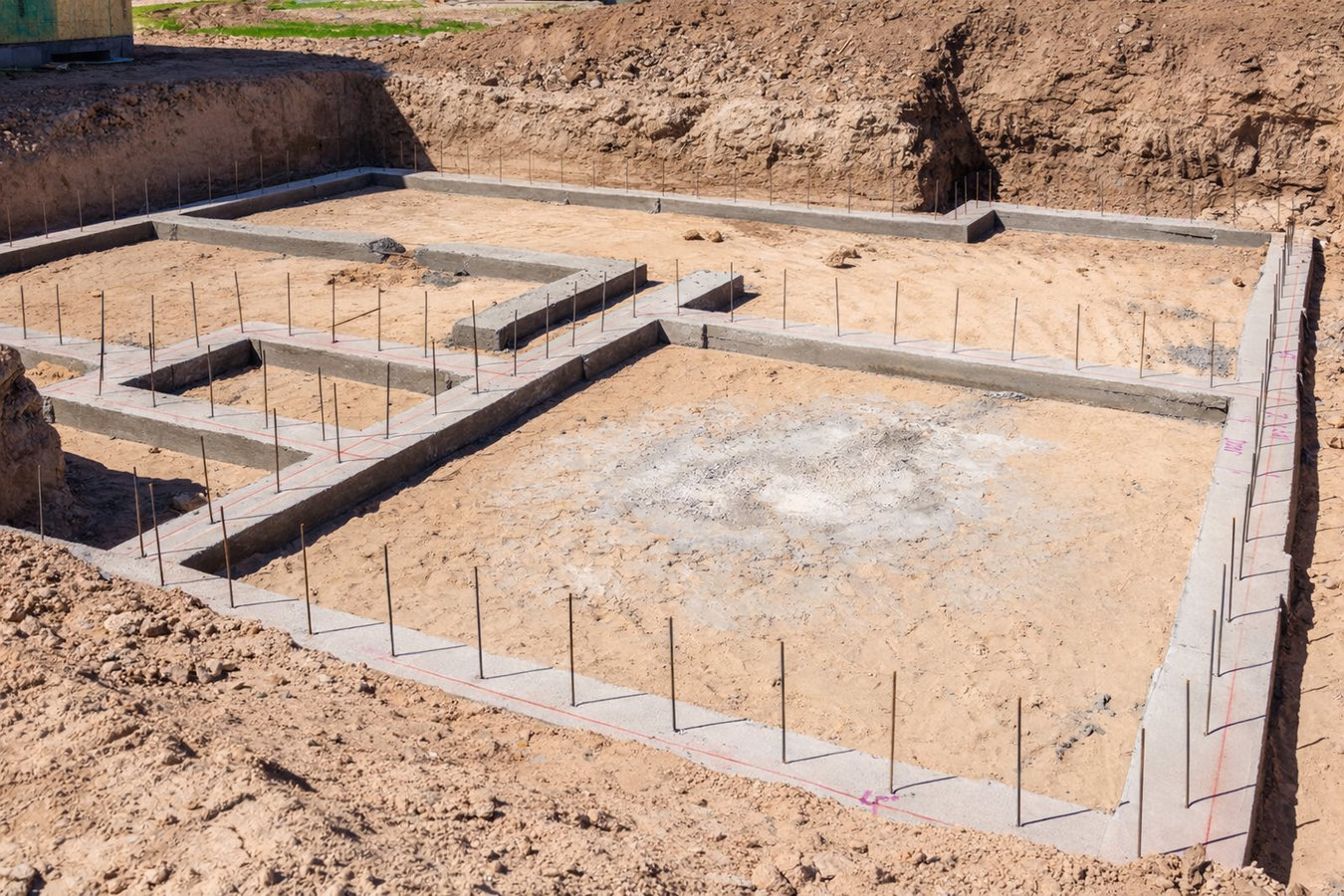
La Habra's housing stock spans from 1920s-era homes near the Euclid Street and La Habra Boulevard corridor to mid-century tracts built outward through the 1960s, and a significant share of those older homes sit on foundations that were never engineered for today's seismic code. We install slab-on-grade and stem wall foundations per CBC Seismic Design Category D requirements, with geotechnical coordination built in for the foothill soil profiles common in the city's northern neighborhoods near the Puente Hills.
La Habra is a dense, family-oriented city with an average household size of 3.08 and 56.8% owner-occupied housing, which means driveways here get heavy daily use. Foothill-adjacent lots in the northern part of the city have soil profiles that cause cracking when driveways are installed without proper subbase compaction and reinforcement. We build driveways that account for La Habra's soil variability from the Puente Hills terrain down to the flatter central neighborhoods.
With over 8,300 residents per square mile, La Habra is one of the denser Orange County cities, and sidewalk condition on streets running through Portola Park and the Euclid corridor matters for daily foot traffic. Tree root intrusion and clay soil heave are the two most common causes of sidewalk failure in La Habra's older neighborhoods. We remove damaged sections, address the root cause at grade level, and pour replacement sections that match ADA requirements.
Footing work in La Habra's foothill neighborhoods requires attention to the lateral soil pressure from graded lots and the seismic requirements that apply throughout Orange County. Whether the project is a new addition footing, a deck footing, or a replacement for a deteriorated continuous footing on an older home, the design must reflect actual soil bearing capacity from a geotechnical investigation rather than prescriptive code tables.
Serving Brea homeowners and properties with the same licensed crew and permit-ready process used throughout La Habra and northwest Orange County.
La Habra was founded in 1896 and incorporated in 1925, and a meaningful portion of its housing was built between the 1920s and the 1950s — decades before the California Building Code adopted modern seismic standards. Homes from that era were typically built on unreinforced raised perimeter foundations or minimal poured slabs that were never designed to flex under the earthquake ground motion requirements in place today. As those homes age and ownership changes, foundation assessment and replacement has become one of the most common concrete jobs in the city.
The Puente Hills terrain that defines La Habra's northern edge creates soil variability that flat-basin cities like Fullerton to the south do not face at the same scale. Foothill lots carry clay-bearing soils that cycle through wet and dry periods, generating the same seasonal stress on slabs and foundations that is common throughout the inland Orange County corridor. By 1928, La Habra had grown into the largest avocado-producing center in Southern California, and the hillside soils that made those orchards viable are the same soils that now sit beneath residential foundations in the city's northern neighborhoods.
The city's high density — over 8,300 residents per square mile in a 7.6-square-mile footprint — means that concrete work here often involves coordinating with neighbors in close proximity and navigating street access on residential streets that do not accommodate large equipment the way wider suburban roads do. Flatwork on La Habra's central streets near Portola Park and the Depot Theatre on South Euclid Street requires the same attention to logistics that hillside work demands in south Orange County.
Foundation permits in La Habra run through the City of La Habra Building Division, and the permit process here is shaped by the city's position at the Orange County and Los Angeles County line — including an unusual arrangement where La Habra contracts with the Los Angeles County Fire Department for EMS and fire protection rather than maintaining its own department. That cross-county character means contractors working in La Habra need familiarity with processes that do not always match what they encounter in cities deeper inside Orange County's borders.
The main corridors — La Habra Boulevard running east-west and Euclid Street running north-south — have been the city's backbone since the first post office opened at that corner in 1898. Most residential work in the city is within a few blocks of one of those two streets. The La Habra Historical Museum — housed in the original 1923 Union Pacific Railroad depot inside Portola Park — sits near the geographic center of the city and is a useful landmark for understanding where the flatland neighborhoods transition toward the Puente Hills foothills to the north.
To the south, Placentia and Yorba Linda are part of the northeast Orange County corridor our crew covers regularly, so permit familiarity and soil knowledge extend across the area without a gap.
Contact us by phone or the online form. We respond within one business day. Tell us the project type, the neighborhood, and the age of your home — those three details shape how we approach the site assessment and what permits will be needed.
We visit the property to assess soil conditions, measure accurately, and identify any access considerations specific to the street. For foundation projects, we note signs of existing movement. The written estimate breaks out excavation, subbase, materials, permit fees, and any required soils investigation separately.
We prepare and submit the City of La Habra permit application with the required engineering documents. Foundation permits require plan review by city staff before work begins. We track the submittal and respond to any plan check corrections to keep the timeline moving.
Active foundation work runs one to two weeks for most residential projects. Concrete reaches full 28-day design strength before framing should start. We schedule required city inspections at hold points and walk the finished project with you at close-out.
We serve La Habra neighborhoods from the Portola Park corridor to the Puente Hills foothills. CSLB C-8 licensed, fully permitted, one business day response.
(657) 333-3989Custom concrete driveways designed for durability, curb appeal, and long-term value in Southern California's climate.
View serviceProfessionally poured concrete patios that extend your living space and hold up to years of outdoor use.
View serviceStamped concrete that replicates the look of stone, brick, or wood at a fraction of the cost.
View serviceSafe, level, and ADA-compliant concrete sidewalks for residential and commercial properties.
View serviceSmooth, durable garage floor concrete that resists oil, cracks, and heavy vehicle traffic.
View serviceDecorative concrete finishes including staining, overlays, and polished surfaces for interior and exterior spaces.
View serviceStructural concrete retaining walls built to hold back soil, control erosion, and define your landscape.
View serviceInterior and exterior concrete floor installation with precise leveling and a clean, lasting finish.
View serviceSlip-resistant concrete pool decks that stay cool underfoot and complement any backyard design.
View serviceSolid concrete steps and stoops built to code, providing safe and attractive entryways.
View serviceConcrete slab foundations poured to spec for new construction, additions, and accessory structures.
View serviceComplete foundation installation for residential and light commercial projects from footing to finished slab.
View serviceCommercial-grade concrete parking lots with proper drainage, marking layouts, and long service life.
View serviceConcrete footings that provide a stable base for walls, posts, decks, and structural columns.
View serviceFoundation raising and leveling services to correct settlement and restore structural integrity.
View servicePrecision concrete cutting for utility access, expansion joints, and removal of damaged sections.
View serviceServing these cities and communities.
Foundation installation, driveways, and sidewalks built for northwest Orange County families. Call for a written estimate within one business day.