
Loading...
Serving Orange, CA and surrounding areas. (657) 333-3989
Your slope is moving, washing out, or pushing against your foundation. We build concrete retaining walls in Orange that hold back soil, handle local clay, and pass city inspection.
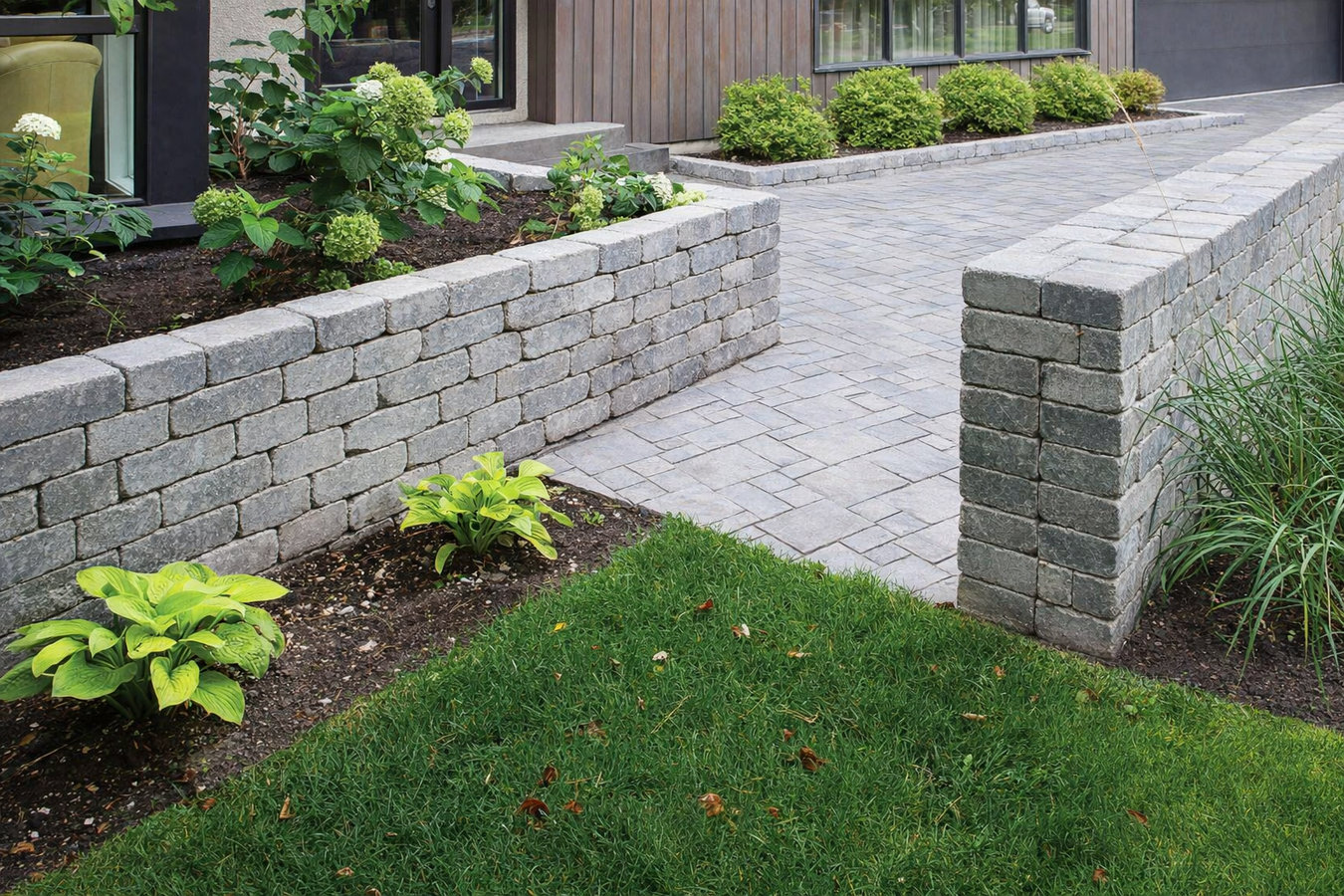
Concrete retaining walls in Orange, CA hold back soil on sloped and hillside lots through a combination of deep footings, steel reinforcement, and built-in drainage, most residential walls between 20 and 40 feet long take two to five days to build once permits are in hand.
Orange has no shortage of properties where the land does exactly what you do not want: it slopes toward the home, sheds soil during winter rains, or sits on an awkward grade that makes the yard hard to use. A concrete retaining wall solves the slope problem permanently rather than patching it season after season. If your project also requires grading or flatwork to create a usable pad behind the wall, our concrete floor installation service handles that work as part of the same project.
The permit process through the City of Orange is real and it matters. Walls above a certain height need a city permit and inspection before the soil goes back. That inspection exists to confirm the wall was built correctly while there is still time to fix anything. We handle the application and coordinate every inspection on your behalf.
If you notice soil creeping downhill after Orange's winter rains, collecting against your fence, driveway, or foundation, the slope is not stable on its own. Erosion like this gets worse each season and can eventually undermine nearby structures. A retaining wall stops the movement and gives the soil a permanent boundary.
A wall that is no longer vertical, or that has cracks running horizontally near the base, is telling you it is under more pressure than it can handle. In Orange's clay-heavy soils this kind of movement often accelerates after wet winters. Catching it early is almost always cheaper than dealing with a collapse.
If part of your property is too steep to mow, walk on, or use for anything practical, a retaining wall can turn that slope into usable flat space. Many Orange homeowners with hillside lots have added terraced walls to create garden beds, patios, or play areas where there was previously just an awkward grade.
When a slope directs water toward your home instead of away from it, the foundation is at risk. In Orange, where winter storms can deliver significant rainfall in short bursts, poor grading combined with no retaining structure can send water straight toward your slab. A retaining wall combined with proper drainage redirects that water before it becomes a foundation problem.
Every retaining wall project we take on starts the same way: a site visit to measure the slope, check the soil, and understand what is driving the problem. From there we design a wall sized to the load it actually needs to carry. Most residential walls are poured-in-place concrete with steel reinforcement inside, a solid footing dug below the surface, and a gravel drainage layer behind the wall so water has somewhere to go. Walls under about four feet are typically more straightforward; anything taller usually requires a city permit and, in many cases, an engineer's review before work begins.
For properties where a single wall is not enough, we also build terraced systems, multiple shorter walls stepped up a hillside to create usable flat areas at different levels. This is common in older Orange neighborhoods where lots were never fully graded when the home was built. If your project calls for new concrete steps construction to connect those levels, we handle that as part of the same scope so you have one contractor coordinating everything.
We pull every permit the City of Orange requires, schedule all inspections, and walk you through what inspectors will look for before they arrive. You will never be surprised by a city hold mid-project. Our written estimates break out labor, materials, permit fees, and any engineering costs separately so you know exactly what you are agreeing to before work starts.
Best for homeowners who need maximum strength and longevity, especially on hillside lots or wherever soil pressure is high.
Suits projects where a modular aesthetic is preferred or where site access makes poured-in-place forming difficult.
Ideal for steeply sloped yards where a single tall wall would require engineering and a series of shorter walls creates usable flat areas instead.
A good fit when the wall is visible from the street or yard and the homeowner wants a finish that complements the home's exterior.
Large parts of Orange sit on expansive clay soil that swells when wet and shrinks when dry. That push-and-pull cycle happens every year and puts steady lateral pressure on any wall that is not built to handle it. A wall with a footing that is too shallow or no drainage behind it will start to lean within a few seasons. That is not a hypothetical: it is why so many older walls in this area fail after a wet winter. We size footings and drainage specifically for the soil conditions on your lot, not to a generic template. California's geologic survey documents the expansive soil zones across Southern California, and Orange County is well represented.
Properties closer to the Santiago Hills and Irvine Regional Park often have steep grade changes where a retaining wall is not just a landscape feature but structurally essential. Hillside projects in Orange can also trigger additional review under California's grading requirements, which adds steps to the permitting timeline. Homeowners in Anaheim and Santa Ana face similar clay soil challenges on sloped lots, and we serve both areas regularly.
Many Orange neighborhoods, particularly planned communities built in the 1980s and 1990s, also require HOA approval before a city permit is pulled. The HOA may have opinions on wall height, finish material, and color. We help you understand what your association typically requires so the wall is approved before any work begins, not flagged after the fact.
We reply within one business day. We ask a few basic questions about the slope, approximate wall length, and what is driving the project, then schedule a site visit. No honest contractor can give you a real number without seeing the soil and grade in person.
We visit the property, measure the slope, check soil conditions, and deliver a written estimate that breaks out labor, materials, permit fees, and any engineering costs. If a permit is required, we explain the City of Orange process and build approval time into the schedule.
Once you sign, we submit the permit application to the City of Orange Building Division. When approval comes through, the crew excavates, pours the footing, and builds the wall. Drainage material goes in behind the wall before any soil is backfilled, and we schedule any required inspection at that stage.
A city inspector signs off on the completed wall. The crew clears equipment and debris from your property. We walk you through the curing timeline and tell you when it is safe to landscape, load, or build against the wall.
Free on-site estimate. We handle the City of Orange permit from start to finish. No obligation.
(657) 333-3989We pull the City of Orange permit before any excavation starts, and we schedule every required inspection. You will have documented, inspected work on record, which matters if you ever sell your home or file a property insurance claim.
Every wall we build includes gravel backfill and drain pipe behind the wall. This is not an add-on: it is the difference between a wall that holds for 50 years and one that starts leaning after the second rainy season. Most of the failing walls we are called to replace skipped this step.
We excavate below the surface and size footings to the actual clay soil conditions on your lot, not to a minimum. Walls in this area face more lateral pressure through the wet-dry cycle than contractors from outside the region typically account for.
Our California contractor's license is current and verifiable through the California Contractors State License Board in about 30 seconds. A licensed contractor is legally required to carry liability insurance and workers' compensation, which protects your property throughout the project.
The Portland Cement Association defines what a properly built retaining wall looks like: solid footing, reinforcement inside the concrete, and drainage that moves water away from the wall face. Every wall we build hits those marks, and the City of Orange inspection confirms it before we close out the project.
Pour a new concrete slab behind your wall to create the usable flat area your yard has been missing.
Learn moreConnect tiered retaining walls or change in grade with code-compliant concrete steps built to last.
Learn moreOrange's wet season starts in November and that is when unstable slopes do the most damage. Call or submit a request today and we will schedule your site visit within the week.