Loading...
Serving Orange, CA and surrounding areas. (657) 333-3989
Your pool deck handles foot traffic, chlorine splash, and intense Southern California sun every day. We build and replace concrete pool decks in Orange that stay slip-resistant, hold their finish, and handle local soil conditions without cracking apart.
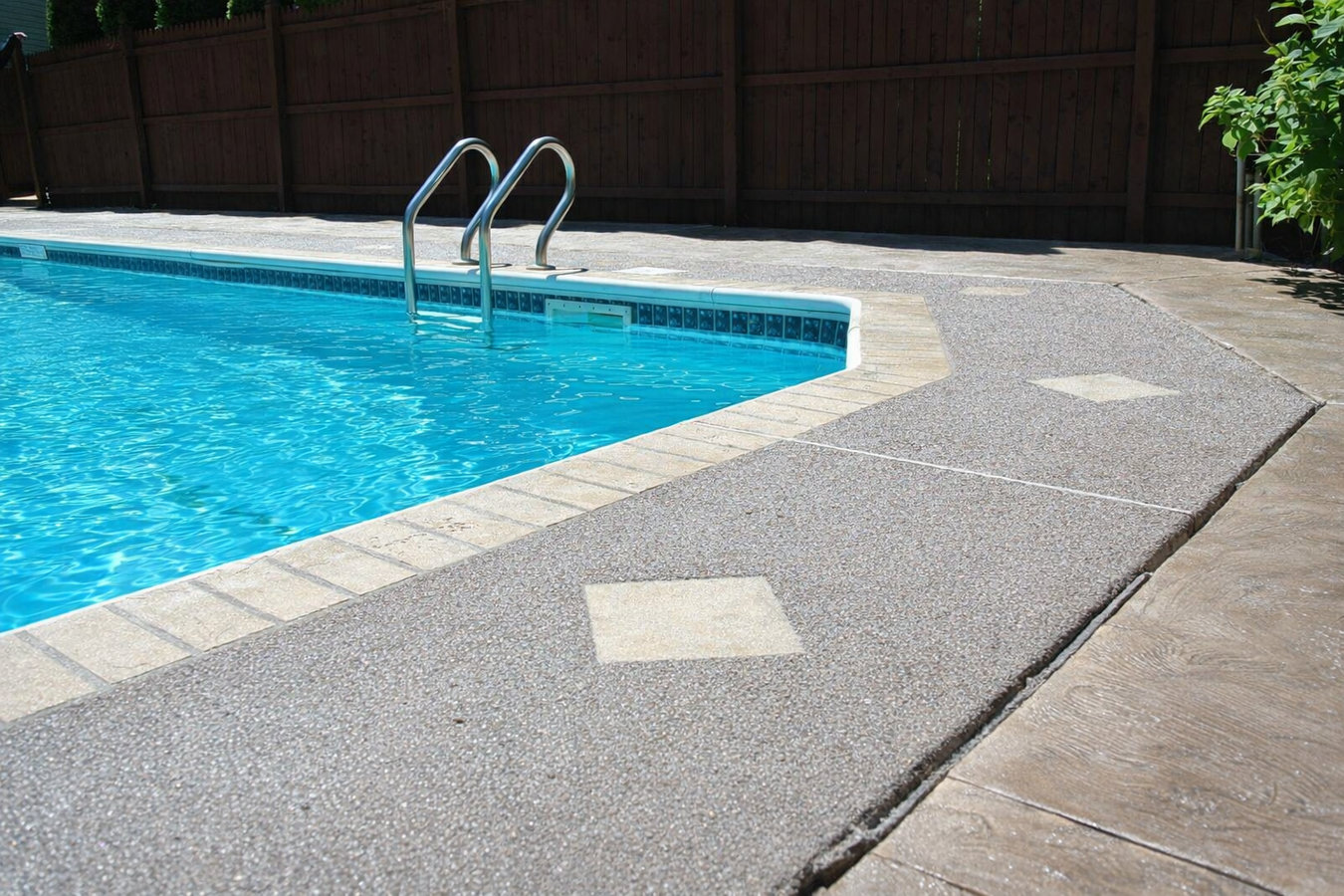
Concrete pool decks in Orange, CA require proper sub-base preparation for local clay soils, a slip-resistant finish, and drainage grading that keeps water moving off the surface, and most residential projects are complete in two to five days from demo through the first sealant coat.
Many homeowners in Orange contact us after noticing that their pool deck has developed uneven sections or wide cracks within a few years of installation. In most cases, the cause is the same: the clay-heavy soil beneath the slab was not properly compacted before the pour. Orange County soils swell during winter rains and shrink during the dry months, and that movement pushes against the concrete from below until it cracks or tilts. Fixing the problem permanently means starting with the ground preparation, not just the surface. If you are also considering upgrading the patio area adjacent to your pool, our concrete patio construction service handles that work as a connected project.
Southern California's UV exposure is another factor that separates pool decks here from those in cooler climates. The intense sun breaks down sealants faster, which means colored or stamped surfaces need resealing more frequently than national guides suggest. A contractor who accounts for local climate conditions, uses UV-stable sealants, and grades the surface correctly from the start will give you a deck that earns its cost over 25 or more years.
If you can feel a noticeable bump or step where two sections of your pool deck meet, the ground underneath has shifted. This is common in Orange County's clay-heavy soils and is not just cosmetic: an uneven edge is a tripping hazard, especially for children running around the pool. Patching the surface alone will not fix what is happening underneath.
Small hairline cracks are normal in aging concrete, but cracks wide enough to trap debris or hold standing water signal that the slab is breaking down. In Orange's climate, water that sits in cracks expands and contracts under the sun, which makes the crack wider over time. Left alone, these cracks allow water to reach the soil underneath and speed up further damage.
If the deck feels slick when wet, the original surface texture has worn down from foot traffic and sun exposure. This is one of the most common reasons homeowners in Orange replace their pool decks. A new textured finish restores the grip that keeps everyone around the pool safe.
Orange's intense year-round sun breaks down the sealant on concrete pool decks faster than most climates. Once the sealant is gone, the concrete absorbs chlorine splash and UV rays directly, causing patchy fading and a powdery surface. If your deck looks noticeably worse each summer despite cleaning, it is past the point where resealing alone will restore it.
Every pool deck project starts with evaluating the existing surface, checking the slope and drainage, and assessing whether the ground underneath shows signs of movement. From there the work splits into two paths: full replacement or resurfacing. Full replacement means demolishing and hauling the old slab, re-grading the base, and pouring fresh concrete with the finish of your choice. Resurfacing overlays a new material onto the existing slab when the structure underneath is still sound. We will tell you honestly which situation you are in before any work begins.
For homeowners who want a plain, durable surface at a straightforward price, a brushed broom finish is the most practical choice for an Orange pool deck. It is slip-resistant straight from the pour, requires minimal ongoing maintenance, and holds up to the chlorine environment and UV exposure this area delivers. Homeowners who want their deck to look like stone, brick, or tile can opt for stamped concrete, which we press into the surface while the concrete is still workable. We also offer colored concrete and exposed-aggregate finishes for backyard spaces where visual appeal matters as much as function. All of these options tie naturally into our concrete steps construction service when the deck connects to entry steps, and we can coordinate both so the surfaces match. If you are also updating adjacent outdoor areas, our concrete patio construction team handles that work as a connected project under the same schedule.
Every project includes a written estimate that breaks down demolition if needed, the pour, the finish, and any permit fees. No line items appear after the work starts.
Best when the existing slab is cracked, uneven, or the base has shifted, and resurfacing would only delay a necessary rebuild.
Suits homeowners who want a practical, slip-resistant surface that holds up to daily pool use without needing frequent maintenance.
A good fit when curb appeal matters and the homeowner wants a surface that resembles stone or tile without the cost of natural materials.
Ideal for backyard spaces where the deck is part of an outdoor living area and a plain gray finish would not do the space justice.
Orange County's expansive clay soils are the factor that most affects how long a pool deck lasts here. The ground swells during winter rains and contracts when the dry months arrive, and that cycle puts stress on any concrete slab poured over it. A contractor who does not account for local soil conditions will skip the extra compaction and sub-base work that keeps the slab from moving, and you will see the consequences within a few years. We prepare the ground for every deck the way Orange's soil conditions actually demand, not the way a generic spec sheet recommends.
The City of Orange requires permits for new pool deck construction and for significant repairs that alter drainage or structure. Pulling a permit means the work gets inspected, which creates a record that protects you if you sell the home or if any dispute arises later. We handle the permit application and coordinate the inspection as part of the project. The City of Orange Building Division oversees issuance and scheduling. Many Orange neighborhoods also have HOA approval requirements for visible exterior work, including pool deck replacement, and we will flag that early so it does not delay your project.
We work throughout Orange and the surrounding cities. Homeowners in Huntington Beach, Costa Mesa, and Irvine deal with the same soil and UV challenges as Orange, and we bring the same local knowledge to every project we take on across the region. The National Swimming Pool Foundation publishes slip-resistance standards for pool areas that guide how we approach every surface finish decision.
We respond within one business day to schedule an on-site visit. You do not need to know exactly what finish you want before the visit, that is what the conversation is for, and we will measure the space and note any drainage or base concerns while we are there.
You receive an itemized written estimate covering demo if needed, the pour, the finish, and any permit fees. If a City of Orange permit is required, we apply for it before scheduling the crew, which typically takes a few business days.
Old concrete is removed and hauled away on day one. The crew re-grades the sub-base, accounts for local soil conditions, sets forms, and pours in sections. Stamped or textured finishes happen during the pour window while the concrete is still workable.
The deck needs 24 to 48 hours before anyone walks on it, and full strength takes about 28 days. Once cured, we apply the sealant coat and walk the finished surface with you before the project closes out. No surprises on the final invoice.
Free on-site estimate, written quote with no hidden line items, and permits handled start to finish.
(657) 333-3989Orange County's expansive clay soils move with every rain and dry cycle. We compact and grade the sub-base to account for those conditions on every project. That preparation is the single biggest factor in whether your deck stays level and crack-free for 25 years or starts shifting in three.
A smooth pool deck is dangerous when wet, and Orange pools are used heavily from April through October. Every deck we pour gets a textured finish that grips bare feet even when soaked. We do not offer this as an upgrade, it is the baseline for every job we take.
Orange requires permits for pool deck construction, and HOA communities add another approval layer. We pull the city permit and flag HOA requirements before scheduling work, so the project starts on time and the finished job is on record for your home's title. The American Concrete Institute sets the industry standards we work to on every pour.
Southern California's UV exposure breaks down standard sealants faster than most homeowners expect. We apply UV-stable sealants rated for high-sun climates on every finished deck. Your deck's color and finish will hold up through multiple summers rather than looking chalky and worn by the end of the first one.
Every one of these points adds up to the same outcome: a pool deck that is safe to use the day it is finished and still earns its keep a decade from now. We verify our license with the California Contractors State License Board and carry the insurance required to protect you and your property throughout the project.
Build or replace concrete entry steps that are level, code-compliant, and built to handle Orange's clay soil movement.
Learn moreExtend your outdoor living area with a new concrete patio that connects seamlessly to your pool deck and yard.
Learn moreFall and spring booking windows fill quickly. Contact us now to lock in your preferred start date before the swim season arrives.