
Loading...
Serving Orange, CA and surrounding areas. (657) 333-3989
Cracked, tilting, or crumbling front steps are a safety hazard and a curb appeal problem. We build new concrete steps in Orange that are reinforced, permit-ready, and built to handle local soil movement and Southern California's intense sun.
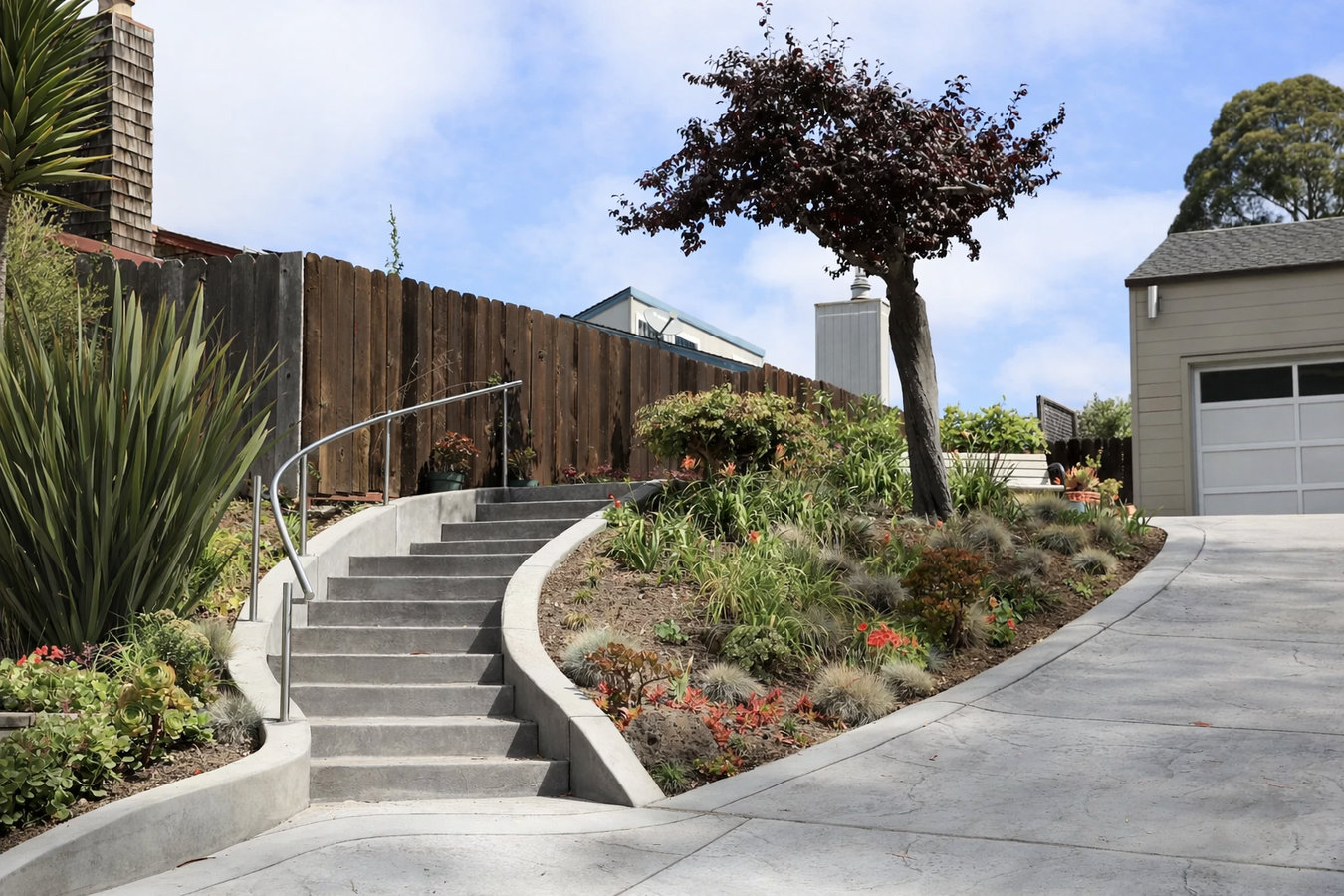
Concrete steps construction in Orange, CA involves forming, reinforcing, and pouring new entry steps with proper base compaction for local clay soils, and most residential projects are complete in one to two days of active work followed by a curing period before the steps are safe to use.
A large share of homes in Orange were built between the 1950s and 1980s, and entry steps from that era are reaching the end of their natural lifespan. Many were poured without steel reinforcement and without expansion joints that allow the concrete to flex as the ground moves. Orange County's clay soils expand and contract with every wet-dry cycle, and steps that were not built to account for that movement will eventually crack, tilt, or pull away from the house. When that happens, a patch is rarely a lasting fix. Our concrete retaining walls service handles situations where the grade change near your entry also needs structural support beyond what steps alone can provide.
Building new steps right means compacting the soil base thoroughly, placing steel reinforcement before the pour, and protecting the curing concrete during Orange's warm months so it reaches full strength. The result is steps that stay put through years of Southern California weather and look like they belong to your home rather than an afterthought.
If you can see cracks wider than a hairline, especially ones that run through an edge or tread, the steps are past the point of simple patching. Surface cracks grow over time as water gets in and the soil underneath shifts, which is especially common in Orange given the area's expansive clay soils. Once structural integrity is compromised, patching is a temporary fix at best.
If any step feels like it moves when you step on it, or if the steps no longer sit level, the base underneath has shifted. This is a safety issue: an uneven step is one of the most common causes of trip-and-fall injuries at home. In Orange's older neighborhoods, this kind of settling is common in homes built before modern compaction standards were in place.
When you see daylight between the back of your top step and the wall of your house, the steps have pulled away from the structure. This gap lets water pool and drain down against your foundation, which can lead to bigger problems over time. It also signals the steps are no longer anchored the way they should be.
If the surface of your steps is flaking off in chunks or the top layer is peeling away, that is spalling, and it usually means the concrete has reached the end of its life. In Orange, this is often accelerated by decades of UV exposure from the intense Southern California sun, which dries out and weakens the surface layer over time. Once spalling starts, the exposed concrete underneath deteriorates faster.
Most concrete steps projects in Orange start with a site visit where we measure the height difference between levels, check the slope and drainage, and assess whether the existing steps can be repaired or need full replacement. Full replacement is the right call when the base has shifted, when the steps have pulled away from the foundation, or when the concrete has crumbled past the point of surface repair. For steps that are structurally intact but cosmetically worn, a resurfacing overlay can extend their life at lower cost.
New steps we build are reinforced with steel rebar embedded in the pour, which keeps the treads from cracking under heavy use or soil movement. For exterior entry steps, a broom finish is the most practical surface, it grips shoes even on dewy mornings and holds up under Orange's UV exposure without demanding constant maintenance. Homeowners who want something more polished can opt for stamped concrete or an exposed-aggregate finish that adds real curb appeal. When the grade change near your entry is substantial, we coordinate entry step work with our slab foundation building service so the structural base and the entry steps are handled together. For graded landscaping areas that need a retaining element alongside the steps, our concrete retaining walls team can handle that work under the same project schedule.
Every project gets a written estimate that breaks down demolition if needed, the pour, the finish choice, and permit fees. No items appear on the final invoice that were not on the original quote.
Best when the existing steps are tilting, crumbling, or have pulled away from the foundation and patching would not resolve the underlying problem.
Suits homeowners who want a practical, safe, and durable entry surface at the most straightforward price point.
A good fit when curb appeal is the priority and the homeowner wants steps that complement the home's exterior rather than blend into it.
Ideal when the structural base is sound but the surface has worn, spalled, or faded and a full replacement would be a larger investment than necessary.
Orange's expansive clay soils are the main reason entry steps here fail faster than homeowners expect. The ground swells during winter rains and contracts as it dries through the summer, and that repeated movement pushes on the concrete base from below. Steps poured directly against a foundation without expansion joints have nowhere to go when the soil moves, so they crack or separate. We account for this at the forming and base-prep stage, not after the fact, which is why the steps we pour stay in place through multiple seasons of Southern California's wet-dry cycles.
The City of Orange requires a building permit for most concrete step replacements, particularly when the work involves structural concrete connected to your home's entry. Pulling the permit means an inspector confirms the work meets current safety standards before the job closes out. That sign-off protects your home's value and avoids problems during any future sale. The City of Orange Building Division handles issuance and inspections, and we manage that process from application through sign-off. If you are in an HOA community, we flag the approval process early so your project does not get delayed after the crew is already scheduled.
We work throughout Orange and the surrounding area. Homeowners in Santa Ana, Anaheim, and Fullerton deal with the same older housing stock and clay soil challenges, and we bring the same local approach to every project across the region. The American Concrete Institute sets the industry standards that govern how we mix, place, and cure concrete on every job.
We respond within one business day to schedule an on-site visit. The visit typically takes 20 to 30 minutes. We measure the height difference between levels, assess the condition of any existing steps, and check drainage. Ask whether the quote includes permit fees, demolition, and cleanup, these are the items most commonly left out of a first estimate.
Once you approve the written quote, we apply for the City of Orange permit before any crew is scheduled. Permit processing typically takes a few business days to a couple of weeks. Your contractor handles this entirely, you do not need to visit City Hall, but plan for that gap between approval and the start date.
Old steps are broken out and hauled away on day one. The crew compacts the soil base, places steel reinforcement, and builds the wooden forms that give your new steps their shape. The pour and finishing typically take a few hours once the forms are ready. In Orange's warm months, we schedule pours for early morning so the concrete cures at the right pace.
You will need to stay off the steps for at least 24 to 48 hours after the pour. The city inspector visits before the permit is officially closed out. Once everything passes, we walk through the finished work with you, remove any remaining forms and debris, and leave the entry clean. The concrete reaches full strength about 28 days after the pour.
Free on-site estimate, itemized written quote, and permits handled from application through city sign-off.
(657) 333-3989Every set of steps we build includes steel rebar embedded in the pour. This is standard on all our projects, not an upgrade you have to ask for. Reinforcement is what keeps steps from cracking under heavy use or shifting as the soil beneath them moves through Orange's wet-dry seasons.
A large share of homes in Orange were built between the 1950s and 1980s, and many still have original entry steps sitting on clay soil that has been moving for 40 to 60 years. We have replaced steps on homes across this era and know what the base conditions typically look like before a shovel goes in the ground.
We handle the City of Orange permit from application through inspector sign-off on every qualifying project. You do not need to track down city forms or schedule inspections yourself. The finished work is documented, code-compliant, and on record for your home's title. The American Society of Concrete Contractors sets the professional standards we follow on every job.
Orange summer temperatures regularly reach the mid-90s, and concrete poured in the heat of the afternoon can dry too fast and end up weaker than it should be. We schedule warm-weather pours for early morning and apply curing protection immediately after finishing. You get steps that are as strong as they are supposed to be, not just ones that look right on day one.
Every project we take on is backed by our California contractor's license, which you can verify directly on the California Contractors State License Board website. We carry general liability insurance and workers' compensation on every job so that you and your property are protected throughout the project.
Pour a new concrete slab foundation with proper reinforcement and drainage for Orange County's clay soil conditions.
Learn moreInstall a concrete retaining wall to manage grade changes near your entry or landscape areas where steps alone are not enough.
Learn morePermit season fills up and spring booking windows go fast. Reach out now to get your project on the schedule before summer heat arrives.